-
Last updated on October 14, 2026
-
Providing the Cloudflare configuration in the plugin settings will allow the plugin to automatically configure Cloudflare for your website.
-
Important: The automated integration described below requires the Converter for Media plugin version 6.7.0 or higher. Please update the plugin before you begin the configuration.
-
How did it work previously?
In the past, Cloudflare’s default infrastructure did not fully support the dynamic serving of multiple versions of the same file (like WebP and AVIF formats) on the exact same URL. To ensure your optimized graphics displayed correctly for supported browsers, our plugin had to intentionally bypass Cloudflare’s cache (by enforcing the
Cache-Control: privateheader on image files).
-
What has changed and what do you gain?
Cloudflare has introduced a new feature supporting the Vary header within Cache Rules across all their plans, including the Free plan. This means Cloudflare can now successfully cache multiple versions of the same file, on the exact same URL, based on headers sent by the browser.
The latest version of our plugin takes full advantage of this solution, offering automated integration via API.
Key benefits:
- Your WebP and AVIF images are now 100% cached on Cloudflare’s lightning-fast CDN servers, while still maintaining full dynamic delivery.
- Significantly higher performance and reduced load on your server.
-
Step-by-step configuration
The plugin takes full advantage of Cloudflare’s new solution, offering an automated, zero-maintenance configuration via API. Once connected, everything works seamlessly in the background. Here is how to enable cache optimization:
-
Step 1.
To allow the plugin to create the necessary rules, you must generate a Cloudflare API Token. We have prepared a secure link containing encoded parameters – it will launch a token generator with the absolute minimum permissions required for the plugin to work.
-
Step 2.
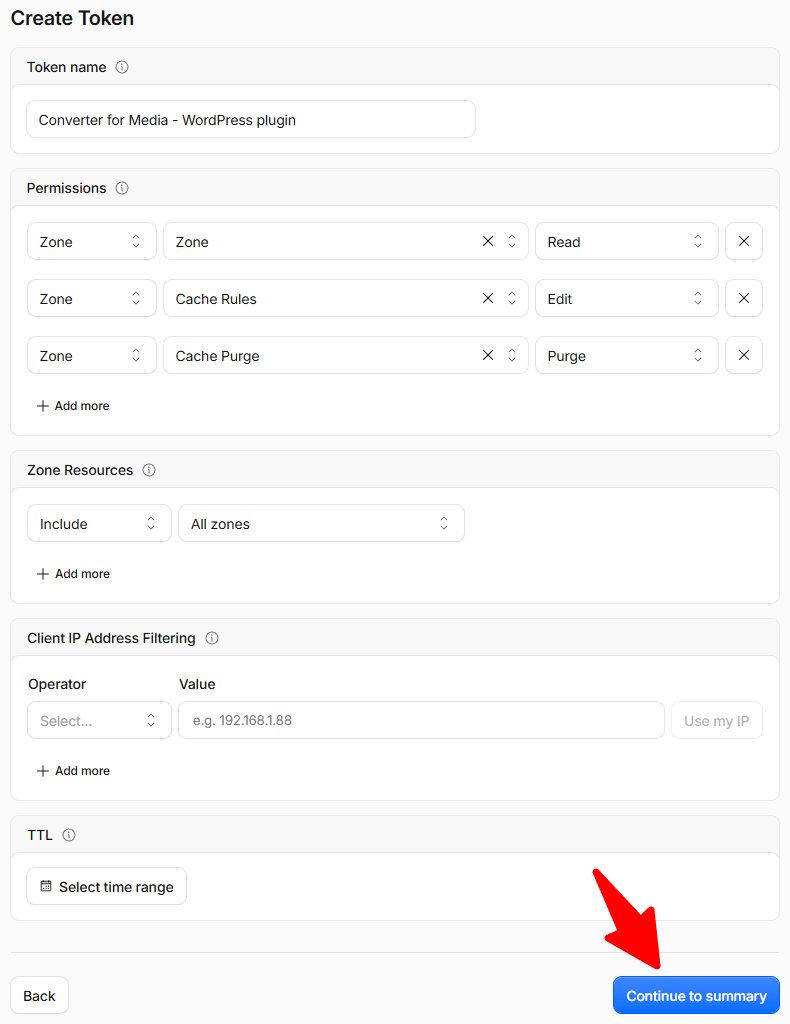
After clicking the link, log in to your Cloudflare account. You will see the token generator wizard, where all fields and permissions are already correctly set (see screenshot). Do not change anything on this screen – just scroll to the very bottom and click the “Continue to summary” button.
-
Step 3.
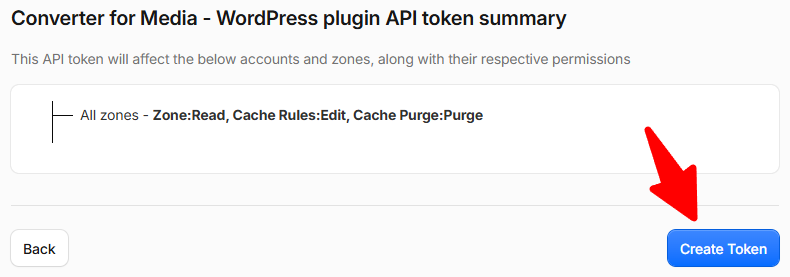
On the next summary screen, which confirms the scope of the token’s permissions, simply click the “Create Token” button.
-
Step 4.
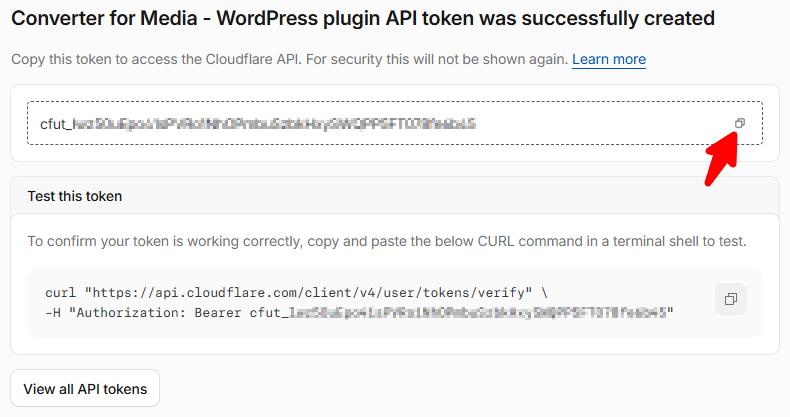
The Cloudflare system will display your new API key. Copy this entire string of characters. For security reasons, this key will not be shown again once you close the page.
-
Step 5.
Go back to your WordPress dashboard and navigate to our plugin settings page, specifically the “CDN Settings” tab. Paste the copied key into the field named “Cloudflare API Token”.
-
Step 6.
Once you enter a valid API Token, the plugin will immediately communicate with Cloudflare and load a list of your domains (zones) in the “Cloudflare Zone ID” field. Select the domain associated with your current WordPress installation from the list.
-
Step 7.
Save the changes at the very bottom of the plugin settings page.
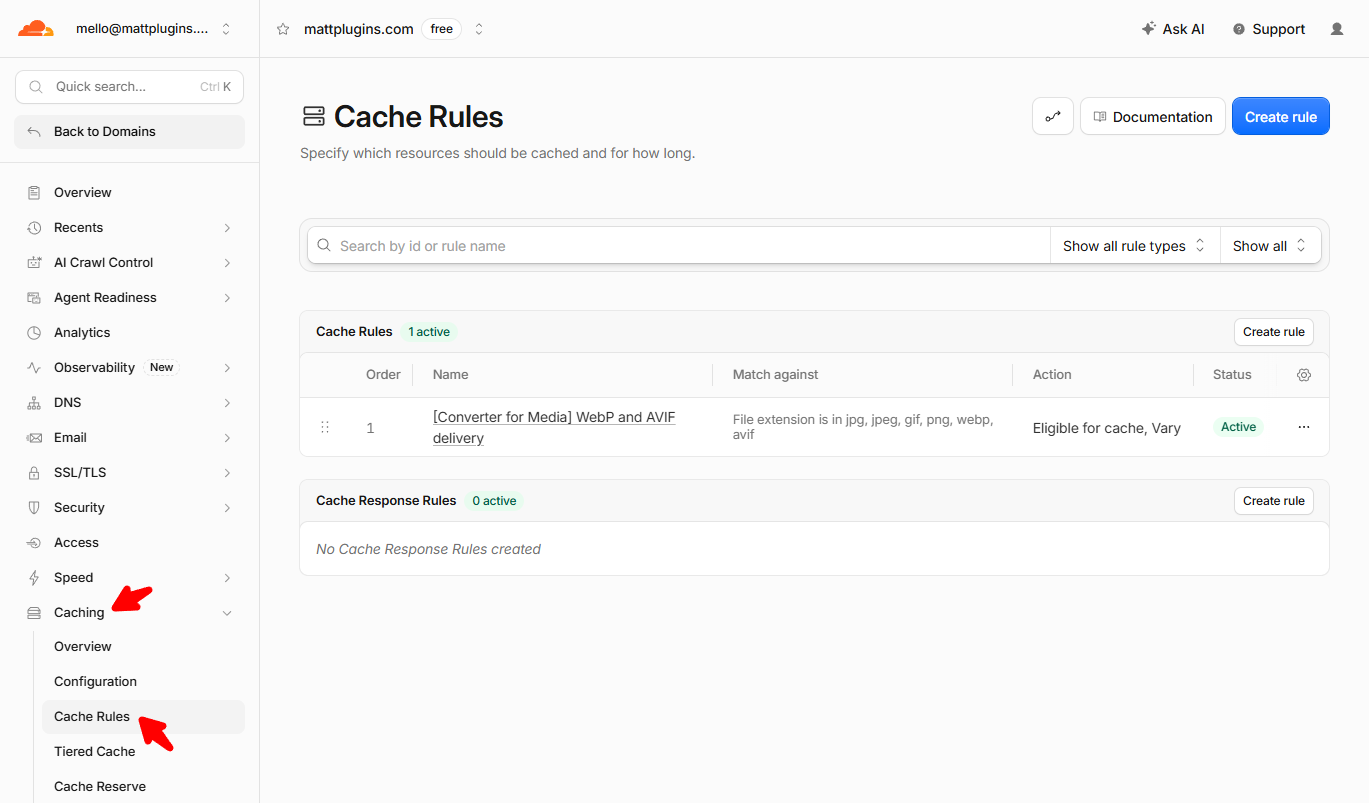
The plugin will immediately add a new Cache Rule to your selected Cloudflare zone configuration. You can verify this by checking the “Caching -> Cache Rules” section in your Cloudflare dashboard.
-
We are waiting for your feedback!
Fully automated Cloudflare integration is a new, crucial feature in our plugin. We want to ensure it works flawlessly for every website.
If you encounter any errors during configuration, if any step seems unclear, or if you have ideas on how to optimize this process – please email us at
hello@mattplugins.com. Your feedback will help us perfect this solution!